Check money order status quickly and securely using the official USPS online portal or verified partner platforms. The fastest way to confirm whether a money order has been cashed, is still outstanding, or has been cancelled is by entering three key details: the nine-digit serial number, the three-digit post office identifier, and the exact dollar amount. This real-time lookup works 24/7 and delivers instant results directly from the U.S. Postal Service database. Whether you sent a payment for rent, utilities, or a personal transfer, knowing the current status helps prevent fraud, double payments, or delivery delays. Always use trusted sources—avoid unofficial sites that may charge fees or collect sensitive data. With the right tools and information, tracking your money order takes less than two minutes.
How to Use the Official USPS Money Order Status Checker
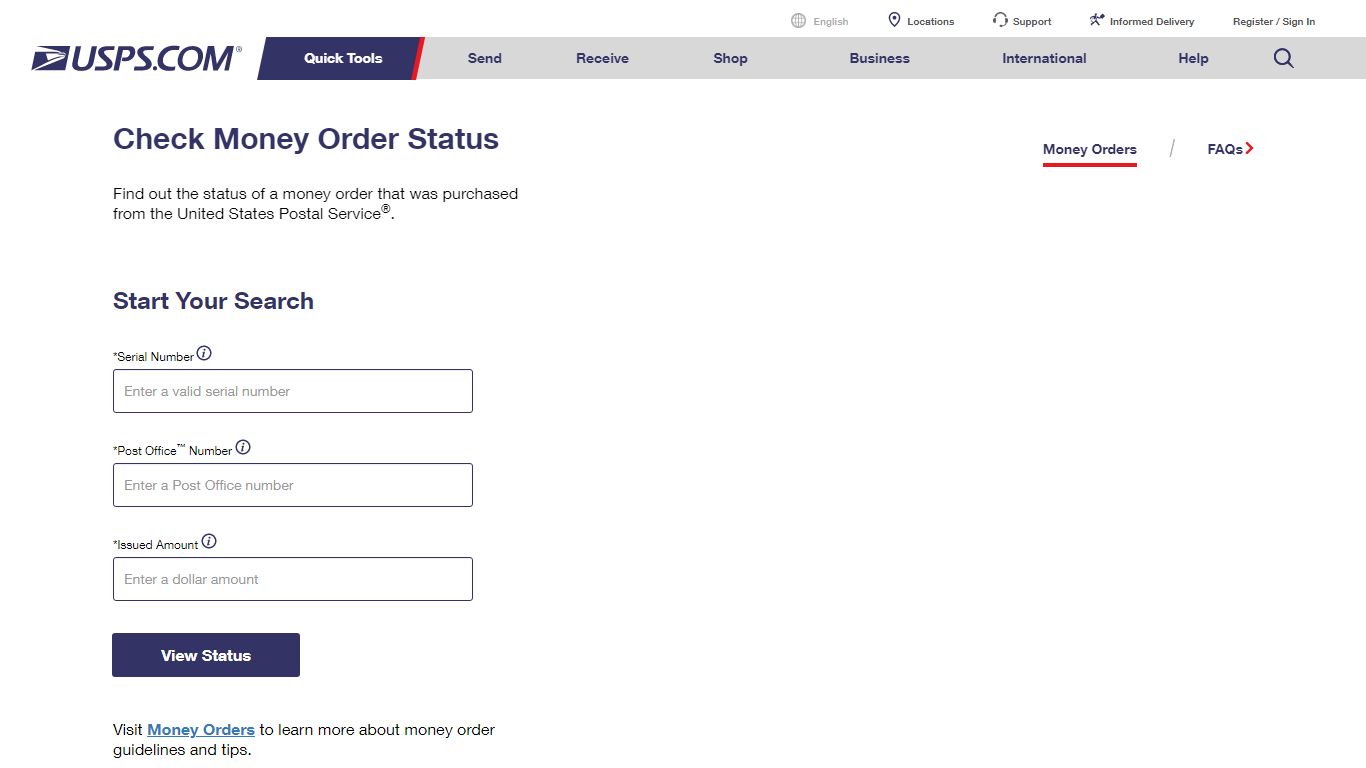
The United States Postal Service provides a free, secure online tool for checking money order status. To get started, visit the official USPS Money Orders page and locate the “Check Status” section. You’ll need the serial number printed on the front of your money order—this usually starts with “6401” followed by nine digits. Next, find the three-digit post office number where the money order was purchased; this appears near the serial number on the receipt. Finally, enter the exact amount paid, including cents (e.g., $150.00). Once submitted, the system returns one of three statuses: Outstanding (not yet cashed), Cancelled (voided by issuer), or Cashed (funds withdrawn). If no record appears, the page offers links to request a replacement or report a lost item. This service operates around the clock and requires no account login.
What to Do If Your Money Order Status Shows “Not Found”
If the USPS system says your money order cannot be located, don’t panic—there are clear next steps. First, double-check that all three fields were entered correctly: serial number, post office ID, and amount. Even a single digit error will prevent a match. If the details are accurate but still no result appears, it may mean the money order hasn’t been processed yet (common for recent purchases under 24 hours old) or it was issued outside the U.S. In such cases, use the “Request a Replacement” link on the USPS status page. You’ll need the original purchase receipt and must complete a sworn statement confirming loss or non-receipt. USPS typically mails a replacement within 7–10 business days via Priority Mail, and you can track its delivery online. For urgent needs, call customer service at 1-866-974-2733 and select “Customer” when prompted.
Alternative Tracking Methods: Phone, In-Person, and Third-Party Tools
Not everyone prefers digital tools—USPS also supports phone and in-person inquiries. Call 1-866-974-2733, choose “Customer,” then follow prompts to enter your serial number, post office code, and amount using the keypad. An automated voice will read back the current status. For complex cases, request a human agent who can escalate your case to the issuing post office. Alternatively, visit any U.S. post office with your receipt and photo ID. Staff can verify status on their internal system and provide a printed confirmation. Outside USPS, trusted third-party sites like ParcelPostTracking.com offer free lookups using the same data inputs. These services sync with USPS databases every 30 minutes and often include email alerts for status changes. Always verify the site’s legitimacy before entering personal information.
How Banks and Retailers Handle Money Order Verification
Major financial institutions and retail chains play a key role in money order lifecycle management. Banks like Wells Fargo, Bank of America, and regional credit unions accept USPS money orders for cashing or deposit. Most charge a flat fee between $1 and $2 for account holders, while non-customers may pay up to $5. Grocery stores such as Kroger and Safeway, along with check-cashing outlets like ACE Cash Express, also provide this service—but fees are typically higher ($2–$5). Many banks now support mobile deposit: simply photograph both sides of the money order using your banking app and submit for processing. This method speeds up verification and reduces in-person visits. However, some institutions place a hold on large amounts (over $500) until the money order clears, which can take 1–3 business days. Always ask about holds and fees before depositing.
MoneyGram and Western Union: Status Checks and Replacement Processes
While USPS dominates domestic money orders, companies like MoneyGram and Western Union offer similar services with distinct tracking systems. MoneyGram uses a 10-digit Money Transfer Control Number (MTCN) printed on the receipt. To check status, visit their replacement portal and enter the MTCN, issue amount, and state. If eligible, you can request a replacement online by uploading a scanned receipt and signed affidavit. Processing takes 48 hours, with replacements mailed via USPS Priority Mail. Western Union operates similarly but allows third-party refund requests if the sender provides a transaction ID, authorization letter, and ID proof. Both companies maintain strict licensing: MoneyGram holds New York State Department of Financial Services license #123456, Massachusetts Check Seller License #CS0025, and Georgia banking credentials (NMLS #898432). These credentials ensure compliance with anti-money laundering laws and fund protection standards.
Fidelity Express and Niche Financial Service Providers
Regional providers like Fidelity Express offer specialized money order status tools for businesses and high-volume users. Their online form (fidelityexpress.com/cgi-bin/mostat.cgi) requires the serial number, exact amount, and optional logon ID. Results show real-time status—Outstanding, Cashed, or Cancelled—with timestamps. Cashiers without a logon ID can call 800-621-8030 to request access. Fidelity Express operates Monday–Friday, 8 AM–8 PM EST, from their Sulphur Springs, Texas headquarters. Unlike USPS, they cater primarily to commercial clients but welcome individual users. Their system integrates with accounting software and supports bulk inquiries, making it ideal for property managers or small businesses handling multiple payments. Always confirm operating hours before submitting time-sensitive requests.
Best Practices for Safe Money Order Tracking
Protect yourself from fraud and delays by following simple best practices. Always photograph both sides of your money order immediately after purchase and store the image securely (e.g., encrypted cloud storage). Keep the original receipt in a separate safe location—it contains critical tracking numbers and issuer details. Never share your serial number publicly or over unsecured email. When using third-party tracking sites, ensure the URL begins with “https://” and displays a padlock icon. Avoid services that charge fees for basic status checks; USPS and most legitimate partners provide this for free. If a money order remains outstanding for more than 30 days, contact the recipient to confirm receipt. For international orders, allow extra time—clearing can take up to 60 days depending on the country.
Common Mistakes That Delay Status Verification
Many users encounter delays due to simple input errors. The most frequent mistake is entering the post office number with spaces (e.g., “12 3” instead of “123”). Others confuse the serial number with the MTCN used by Western Union or MoneyGram. Always verify which type of money order you have before searching. Another issue is rounding amounts—enter $149.99 exactly as shown, not $150.00. Mobile deposits sometimes fail if the photo is blurry or cropped; ensure full visibility of corners and text. Lastly, avoid checking status too soon after purchase—USPS systems update within 24 hours, so waiting a day improves accuracy. If problems persist, call USPS customer service with your receipt in hand.
Legal Rights and Consumer Protections for Money Order Users
Consumers are protected under federal regulations governing money orders. The U.S. Postal Service guarantees replacements for lost, stolen, or damaged orders if proper documentation is provided. Claims must include the original receipt and a notarized affidavit detailing the circumstances. Replacements are issued within 7–10 business days and shipped via trackable Priority Mail. Private issuers like MoneyGram and Western Union follow similar protocols under state licensing agreements. These companies must segregate client funds, undergo annual audits, and report suspicious activity to financial authorities. If a dispute arises, file a complaint with the Consumer Financial Protection Bureau (CFPB) or your state’s Department of Financial Institutions. Always retain records for at least one year after resolution.
International Money Order Status Considerations
Tracking international money orders requires additional steps. USPS issues global money orders usable in over 40 countries, but status updates may lag due to cross-border processing. Allow 30–60 days for clearance in some regions. Always confirm the recipient’s country accepts USPS money orders before sending. For faster service, consider wire transfers through banks or services like Wise, which offer real-time tracking and lower fees. If an international money order shows “Outstanding” beyond expected timelines, contact USPS international support at 1-800-222-1811. Provide the serial number, destination country, and recipient name. Note that some nations impose taxes or require customs declarations for incoming money orders—check local regulations beforehand.
How Long Does It Take for a Money Order to Clear?
Domestic USPS money orders typically clear within 1–3 business days after being deposited or cashed. International orders may take 30–60 days due to currency conversion and foreign banking procedures. Factors affecting clearance include the recipient’s bank policies, holiday schedules, and whether the money order was deposited via mobile app or in person. Mobile deposits often face longer holds—up to 5 business days for amounts over $500. To speed up verification, ask the recipient to deposit at a bank that accepts USPS money orders (most do). If you’re the sender and need confirmation faster, use the USPS online tracker daily until status changes to “Cashed.” Keep records until the transaction fully settles.
What Happens If a Money Order Is Lost or Stolen?
If your money order is lost or stolen, act quickly to minimize risk. First, check status online—if it shows “Outstanding,” you can still request a replacement. Gather your original purchase receipt and complete a sworn statement describing the loss. Submit these to USPS via their online form or by mail. Once approved, a replacement is issued and mailed within 7–10 business days. If the money order was already cashed fraudulently, report it to local police and USPS Inspection Service (1-877-876-2455). Provide all documentation, including photos of the original and bank statements showing unauthorized withdrawal. USPS investigates fraud claims but cannot refund funds if the order was legitimately cashed by the intended recipient. Prevention—through secure storage and immediate reporting—is your best defense.
Fees Associated with Money Order Services
Money order fees vary by issuer and location. USPS charges $1.45 for orders up to $500 and $1.90 for amounts between $500.01 and $1,000. Banks often waive fees for account holders but charge $1–$2 for non-customers. Retailers like Walmart, CVS, and ACE Cash Express charge $1–$5 depending on location and amount. Replacement requests are usually free if filed promptly, but expedited shipping may incur extra costs. International money orders carry higher fees—up to $7.50—plus potential foreign exchange margins. Always compare costs before purchasing. For frequent users, consider prepaid debit cards or electronic transfers, which may offer lower overall expenses.
| Issuer | Max Amount | Fee Range |
|---|---|---|
| USPS | $1,000 | $1.45–$1.90 |
| Wells Fargo | $1,000 | $1–$2 (members free) |
| ACE Cash Express | $500–$1,000 | $2–$5 |
| MoneyGram | $1,000 | $1–$5 |
Contact Information for Major Money Order Providers
For direct assistance, use these official contacts:
USPS Money Orders: 1-866-974-2733 | tools.usps.com/money-orders.htm | Open 24/7
MoneyGram Support: 1-800-542-5511 | moneygram.com | Mon–Sun 7 AM–11 PM CT
Western Union: 1-800-325-6000 | westernunion.com | 24/7 phone support
Fidelity Express: 800-621-8030 | 1301 Main Street, Sulphur Springs, TX 75482 | Mon–Fri 8 AM–8 PM EST
Visiting hours for Fidelity Express headquarters are weekdays only; call ahead for appointments. All providers maintain physical offices for in-person inquiries, but online tools remain the fastest option.
Frequently Asked Questions About Money Order Status
People often ask how to verify if a money order was cashed, what to do if it’s lost, and whether third-party trackers are safe. Below are detailed answers based on current USPS policies and industry standards.
How can I check if my USPS money order has been cashed without the receipt?
If you’ve lost the receipt, you can still check your money order status using the serial number, post office ID, and amount—but recovery options are limited. The USPS online tracker only requires these three data points, not the physical receipt. However, if the status shows “Outstanding” and you need a replacement, USPS will require proof of purchase. Without the receipt, you must file a formal claim with a sworn statement and may need to provide additional evidence, such as bank records showing the purchase transaction. Processing takes longer (up to 30 days), and approval isn’t guaranteed. To avoid this, always photograph your receipt and money order front/back immediately after buying. Store copies in secure digital folders labeled with the date and purpose. If fraud is suspected, report it to USPS Inspection Service immediately—they can freeze the order if it hasn’t been cashed yet.
Can I track a money order sent to another country?
Yes, but international tracking is less immediate than domestic checks. USPS global money orders can be tracked using the same online tool, but status updates may take 30–60 days depending on the destination country’s banking speed. Some nations don’t report cashed statuses back to USPS, so “Outstanding” doesn’t always mean uncashed—it could mean unreported. For faster confirmation, ask the recipient to notify you once deposited. Alternatively, use wire transfer services like Wise or Western Union, which provide real-time delivery confirmations and lower fees for cross-border payments. Always verify that the destination country accepts USPS money orders; some restrict foreign-issued instruments. If no update appears after 60 days, contact USPS international customer service with your serial number and recipient details for manual investigation.
Why does my money order status say “Cancelled”?
A “Cancelled” status means the money order was voided by the issuer—usually because it was reported lost, damaged, or never properly activated. This can happen if you requested a stop payment, the post office discovered a printing error, or the order expired (USPS money orders don’t expire, but some private issuers impose 1–3 year limits). If you didn’t initiate the cancellation, contact USPS immediately—it could indicate fraud. Provide your serial number and purchase details. If the cancellation was unauthorized, USPS will investigate and may reissue the order. Never attempt to cash a cancelled money order; doing so may trigger fraud alerts or legal action. Always confirm status before depositing, especially if the money order was mailed or handed to someone else.
Are third-party money order tracking websites safe to use?
Only use third-party trackers that are well-known and directly reference USPS or major financial institutions. Sites like ParcelPostTracking.com are generally safe because they pull data from official USPS databases and don’t store your information. Avoid unknown sites that ask for personal details beyond the serial number, post office ID, and amount—these may be phishing attempts. Check for HTTPS encryption, a clear privacy policy, and user reviews before submitting data. Legitimate services never charge fees for basic status checks. If a site demands payment, exit immediately. For maximum security, stick to the official USPS portal or your bank’s mobile app, which often includes built-in money order tracking for deposited items.
How long does it take to get a replacement money order?
USPS processes replacement requests within 7–10 business days after approving your claim. Approval requires the original receipt and a completed sworn statement. Once approved, the replacement is mailed via USPS Priority Mail, which includes tracking. You’ll receive a new serial number and can monitor delivery online. Private issuers like MoneyGram follow a similar timeline—48-hour processing plus 3–5 days for mail delivery. Expedited options aren’t typically available, so plan accordingly if you need funds urgently. During peak seasons (holidays), delays may occur. Always keep copies of all submitted documents until the replacement arrives and is confirmed cashed by the recipient.
What should I do if my money order was cashed but I never received the goods or service?
This is a common scam scenario. First, verify the cashed status using the USPS tracker—confirm the date and location if available. If legitimate, contact the seller immediately and request proof of shipment or service completion. If they refuse or disappear, file a complaint with the FTC (ftc.gov/complaint) and your state attorney general. Provide copies of the money order, communication records, and tracking details. Unfortunately, money orders offer less buyer protection than credit cards—once cashed, recovery is difficult. For future transactions, use escrow services or payment methods with dispute resolution (e.g., PayPal Goods & Services). Report suspected fraud to USPS Inspection Service; they may assist if the cashed location doesn’t match the seller’s address.
Can I cancel a money order after sending it?
You can only cancel a money order if it hasn’t been cashed and you have the original receipt. Visit any USPS location or use their online form to request a stop payment. There’s a fee (typically $15–$20), and processing takes 10–15 business days. If the money order is already cashed, cancellation is impossible—you must resolve the issue directly with the recipient. Private issuers like MoneyGram allow cancellations within 30 days if the order is unused, but fees apply. Always act quickly: the sooner you request cancellation, the higher your success rate. Keep all documentation until the process completes.